
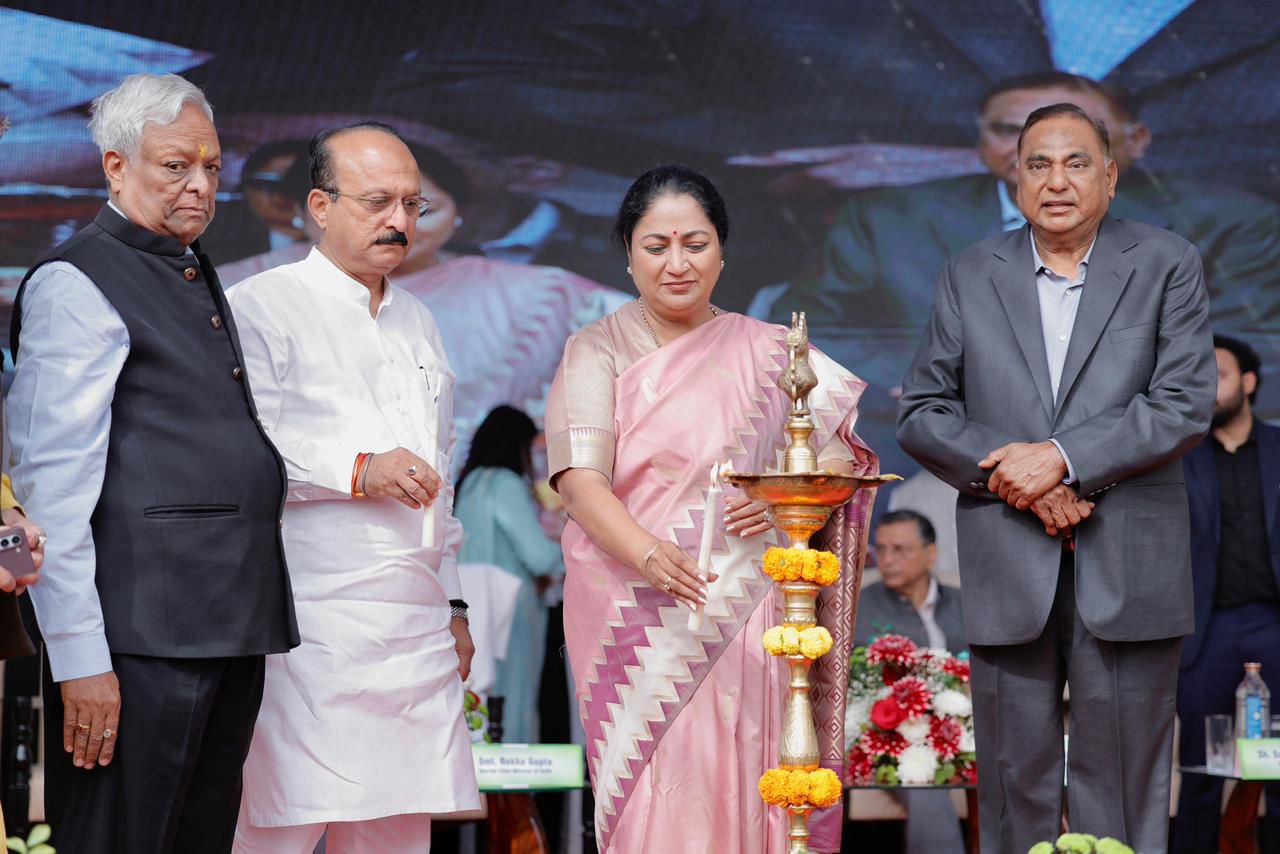


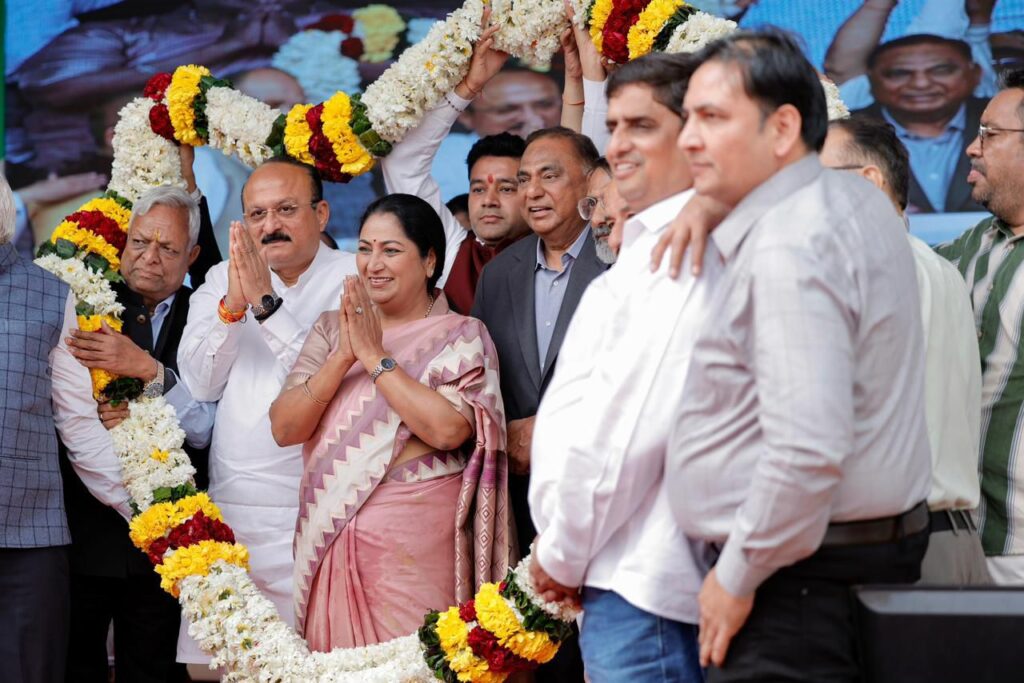
New Delhi, February 26, 2026 — Delhi Chief Minister Rekha Gupta on Thursday launched a major infrastructure push aimed at modernising the capital’s power network while preserving its historic character, inaugurating an underground cabling project in Chandni Chowk and laying the foundation for a new grid sub-station and four battery storage projects.
Table of Contents
Describing Chandni Chowk as “not merely a marketplace but a living symbol of India’s cultural, historical and commercial heritage,” Gupta said the removal of overhead electricity wires would make the area safer, more organised and visually appealing.
₹159.75-Crore Underground Cabling Project
The Delhi government, in partnership with BSES Yamuna Power Limited (BYPL), has initiated a ₹159.75-crore project to shift approximately 52.5 kilometres of overhead power lines underground across 28 historic streets and lanes of Chandni Chowk.
The project includes the installation of 500 new feeder pillars, decorative street-lighting poles and deployment of digital twin technology for real-time monitoring. Around 10,000 consumers are expected to benefit directly.
Officials said the work will be executed in phases during night hours to minimise disruption to traffic and commercial activity. The move is aimed at reducing fire hazards, preventing weather-related outages and improving supply reliability in the congested Old Delhi precinct.
Gupta also indicated that while ₹100 crore had earlier been earmarked for development works in the Chandni Chowk Lok Sabha constituency, allocations could go up to ₹1,000 crore depending on requirements. Redevelopment of 28 roads in the area has already begun, she said.
The Chief Minister added that she has retained charge of the Shahjahanabad Redevelopment Board to ensure coordinated improvements in roads, parking, encroachments and civic amenities, with the goal of transforming the historic quarter into a tourism-friendly and commercially vibrant zone.
New Mandoli Grid to Ease Voltage Fluctuations
In North-East Delhi, Gupta laid the foundation stone for a 66/11 kV GIS grid sub-station at Mandoli with a capacity of 63 MVA. The project, involving an investment of ₹55.5 crore, is slated for completion within 18 months and is expected to benefit around 1.5 lakh consumers.
Residents of Mandoli, Harsh Vihar and adjoining areas are projected to see more stable electricity supply, with reduced voltage fluctuations and fewer outages. Key facilities including Rajiv Gandhi Super Speciality Hospital, Mandoli Jail and a DTC electric bus depot will also receive more reliable power once the grid is operational.
Battery Storage Projects to Meet Peak Demand
Addressing rising electricity demand, particularly during summer months, the Chief Minister also launched four Battery Energy Storage System (BESS) projects under BSES Rajdhani Power Limited (BRPL).
The projects will add a combined capacity of 55.5 MW/111 MWh and are expected to benefit approximately 2.22 lakh consumers across Shivalik, Dwarka (G-5 and G-7) and Goyla Khurd. All four are targeted for commissioning before March 2027.
The battery systems are designed to reduce peak-hour load shedding, stabilise voltage and strengthen grid resilience, while supporting Delhi’s clean energy transition.
Energy Minister Ashish Sood said the programme marks a forward-looking transformation of Delhi’s power sector. He noted that under a broader ₹436-crore plan, overhead wiring is being placed underground in multiple areas of the capital, including Chandni Chowk.
Sood also highlighted that a 20 MW BESS project at Kilokri is the country’s first commercial standalone battery storage project of its kind, and said four additional BESS installations would further stabilise peak-hour supply.
According to the minister, projects worth ₹3,000 crore pending under Delhi Transco Limited have now been approved, and a ₹17,000-crore roadmap has been prepared for power infrastructure development over the next three years.
Gupta said the combined initiatives would ensure “uninterrupted, high-quality and future-ready” power supply to lakhs of households, positioning Delhi’s electricity network as a potential national model for urban infrastructure modernisation.