
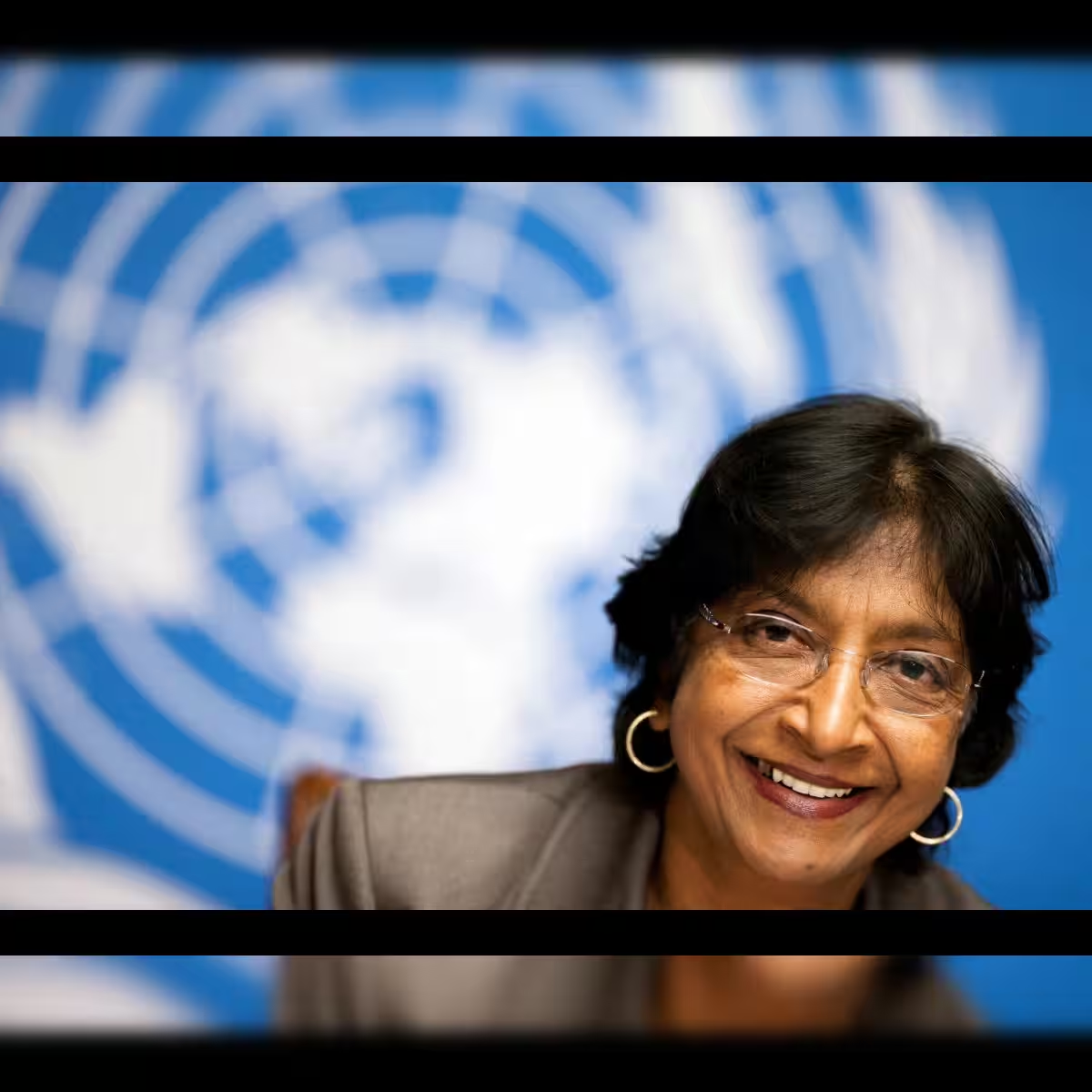


OSLO: Indian-origin South African jurist Navi Pillay has won the 2026 Nobel Peace Prize for her efforts to bring perpetrators of war crimes and genocide to justice, strengthening international law and advancing human rights. Her landmark work has helped establish that sexual violence can constitute genocide and that media figures who incite mass atrocities can be held criminally accountable.
Table of Contents
The Norwegian Nobel Committee said the award underscores the importance of respecting international law amid growing global conflicts, highlighting the role of legal accountability in resolving disputes peacefully and protecting human dignity.
Pillay, who served as a judge at the International Criminal Tribunal for Rwanda and later as the United Nations High Commissioner for Human Rights from 2008 to 2014, has spent decades challenging discrimination and promoting justice for victims of serious crimes.
Landmark rulings on genocide
One of the most significant chapters of Pillay’s career came during the trials linked to Rwanda’s 1994 genocide, in which members of the Tutsi community were systematically killed. Appointed to the international tribunal in 1995, she served as its president from 1999 to 2003.
In 1998, Pillay was among three judges who signed the landmark judgment convicting former mayor Jean-Paul Akayesu of genocide and other crimes. The ruling recognised that rape and sexual violence could constitute acts of genocide when committed with the intent to destroy a protected group, in whole or in part.
She also contributed to proceedings against media figures accused of spreading hatred and inciting violence during the genocide. The cases reinforced the principle that those who use media to encourage mass atrocities can face criminal prosecution.
Helped protect Mandela’s legal rights
Born in Durban, South Africa, on September 23, 1941, Pillay comes from a Tamil family with roots in India. Her grandfather migrated to South Africa as an indentured labourer in the 1890s.
Pillay pursued law despite racial discrimination under apartheid. After studying at the University of Natal and Harvard Law School, she opened her own legal practice in 1967 after established firms refused to employ her because of her race. She became the first woman to establish a law firm in Natal.
In 1973, she filed a petition that helped political prisoners held at Robben Island, including Nelson Mandela, secure access to legal assistance. In 1995, following Mandela’s presidency, she became the first non-white woman appointed to South Africa’s High Court.
From the courtroom to the United Nations
Pillay later served as a judge at the International Criminal Court and led the UN human rights office from 2008 to 2014, working to strengthen protections for vulnerable communities and promote accountability for serious abuses.
Following the Nobel announcement, Pillay referred to the Nuremberg trials, which prosecuted senior Nazi officials after the Second World War, as a powerful symbol of international justice.
Nobel Committee chair Jørgen Watne Frydnes said the committee had been unable to reach Pillay by telephone before announcing the award. He joked that she should answer calls from Norway’s international calling code, +47.
Pillay is expected to receive the Nobel medal, diploma and prize money at the December ceremony. The reported prize amount for 2026 is approximately ₹11.5 crore.
Her award recognises a career that has helped shape international criminal law and reinforced a central principle: serious crimes must not go unpunished, regardless of who commits them.
Trim background for faster impactMove the strongest rulings higher