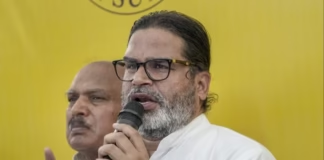
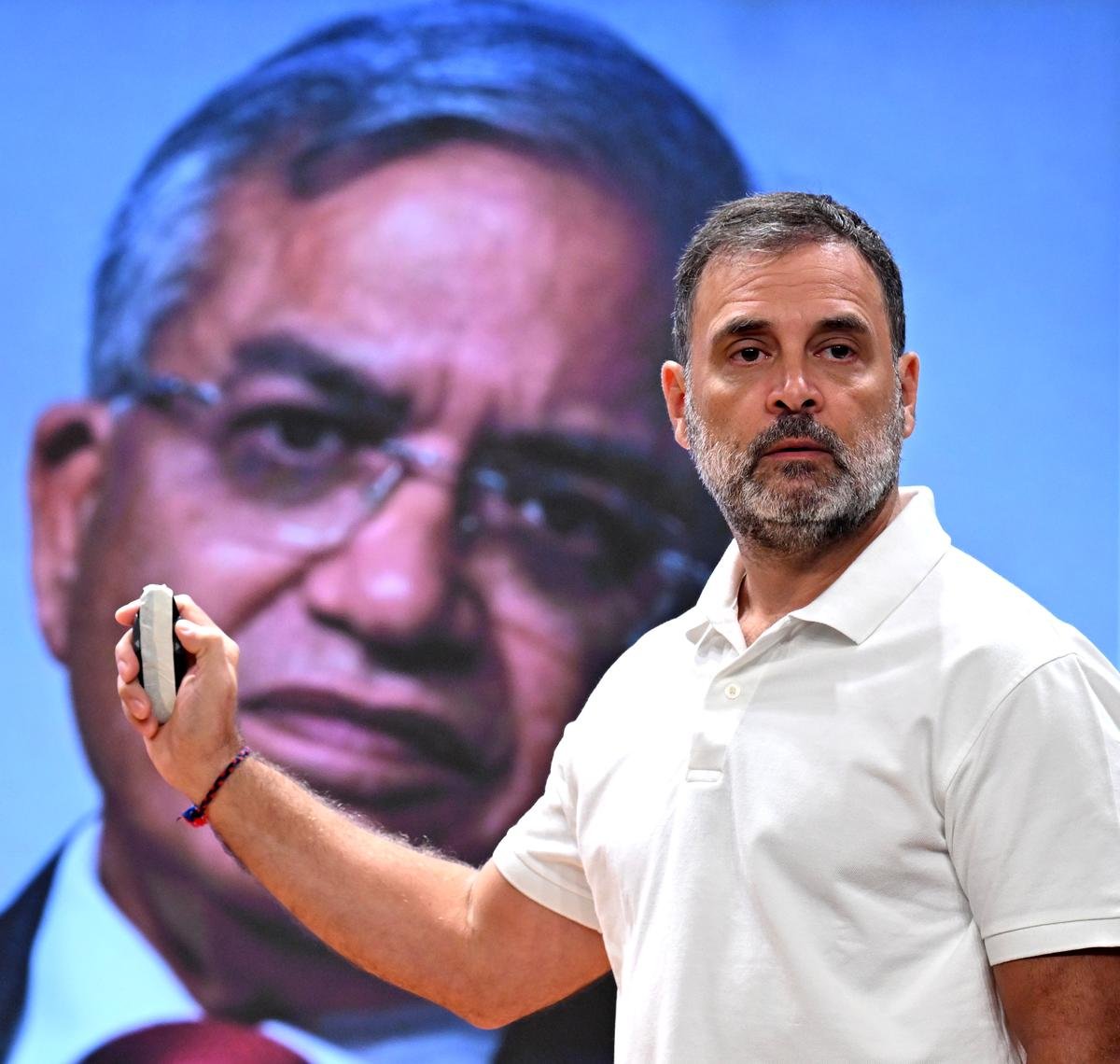


Congress leader Rahul Gandhi questioned the disappearance of anti-incumbency in recent elections, recalled Indira Gandhi’s electoral defeat after the 1971 war and demanded Chief Election Commissioner Gyanesh Kumar’s resignation.
Table of Contents
New Delhi, September 24: Congress leader and Leader of Opposition in the Lok Sabha Rahul Gandhi on Thursday intensified his attack on the Election Commission, alleging irregularities in the electoral process and demanding the resignation of Chief Election Commissioner Gyanesh Kumar.
Speaking at a press conference, Gandhi said he had been raising the issue of what he describes as “vote theft” for nearly three years. His remarks came shortly after an investigative report by The Indian Express reported that two Election Commissioners had raised objections to several decisions and processes within the poll panel.
But Gandhi’s press conference was not limited to the latest allegations. He used the occasion to make a broader argument about elections, constitutional institutions and what he described as the disappearance of anti-incumbency from Indian politics.
Why did Rahul Gandhi mention Indira Gandhi?
One of the most striking references in Gandhi’s address was to his grandmother, former Prime Minister Indira Gandhi.
Gandhi argued that anti-incumbency has traditionally been a powerful force in Indian elections. He pointed to Indira Gandhi as an example, saying that even after the 1971 Bangladesh war, when she was at the height of her popularity, she faced strong political opposition within a relatively short period.
His reference was aimed at highlighting what he sees as a change in electoral patterns.
Gandhi questioned why governments and political parties that have historically faced voter dissatisfaction do not appear to experience the same electoral impact in recent contests involving the BJP and its leadership.
He said that Congress governments, regional parties and other political leaders had all experienced anti-incumbency, and questioned why, in his view, the same pattern had not affected Prime Minister Narendra Modi, Home Minister Amit Shah or the BJP in the manner he expected.
‘The vote is the foundation of the country’
Gandhi’s central argument was that the integrity of the electoral process is directly connected to the strength of India’s constitutional system.
“The vote is the foundation of our country,” Gandhi said, according to the remarks cited in the material.
He argued that the Election Commission, as the institution responsible for conducting elections, has a critical role in protecting that vote.
Gandhi further warned that if the electoral process were undermined, the consequences would extend beyond individual elections.
He said that weakening the Constitution would ultimately affect laws and institutions as well, describing the alleged problems with voting as an issue affecting every citizen’s democratic rights.
What does the Indian Express report say?
Gandhi’s press conference followed an investigative report published by The Indian Express.
According to the report, Election Commissioners Sukhbir Singh Sandhu and Vivek Joshi raised objections on 14 occasions over a period of 10 months.
The report said their concerns included issues related to access to information, the addition of new voters and the deletion of names from electoral rolls. It also reported that the two commissioners had questioned certain actions as allegedly “unauthorised” or “unlawful.”
The report has since become a major point of discussion among opposition parties, which have renewed their criticism of the Election Commission’s functioning.
Gandhi’s demand for the Chief Election Commissioner’s resignation
Gandhi also directly targeted Chief Election Commissioner Gyanesh Kumar, calling for his resignation.
The Congress leader said the controversy should not be viewed simply as a dispute between political parties. In his argument, the larger question was whether voters could have confidence that their votes were being properly protected and counted.
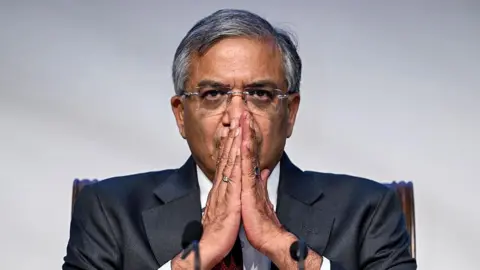
He also displayed photographs of Prime Minister Narendra Modi, Amit Shah and industrialist Gautam Adani, among others, while making his allegations about what he described as threats to democratic institutions.
The Election Commission’s role in maintaining electoral rolls and conducting elections has been under political scrutiny, with opposition parties repeatedly raising questions over transparency and electoral procedures.
Gandhi’s latest remarks therefore bring together two arguments that the Congress has been pushing: alleged irregularities in the electoral process and the broader question of whether India’s traditional electoral checks, including anti-incumbency, are functioning as they historically have.
For Gandhi, the two issues are connected by a single question — whether voters can continue to have full confidence in the democratic process.