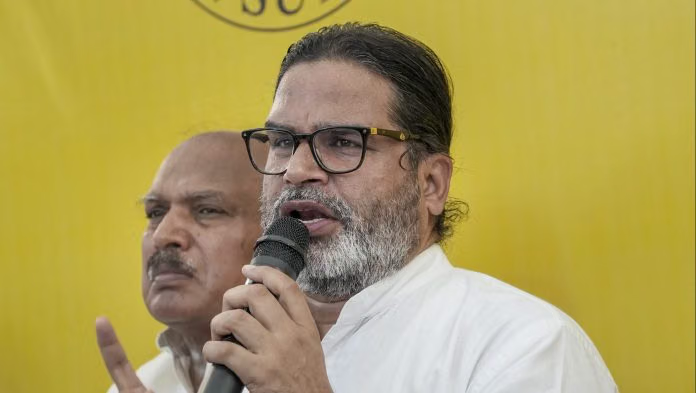


Patna: Just nine months after suffering one of the biggest electoral setbacks of his political career, political strategist-turned-leader Prashant Kishor has made a remarkable return to the spotlight by winning the Bankipur Assembly by-election in Bihar.
Table of Contents
The victory marks a significant turnaround for the founder of the Jan Suraaj Party, whose fledgling political outfit failed to make an impact in the 2025 Bihar Assembly elections. At the time, the party fielded candidates in 238 constituencies but failed to win a single seat, while 236 candidates lost their deposits. Many political observers predicted that Kishor’s political ambitions in Bihar had come to an end.
However, the recent by-election result has challenged that perception.
A Victory in a BJP Stronghold
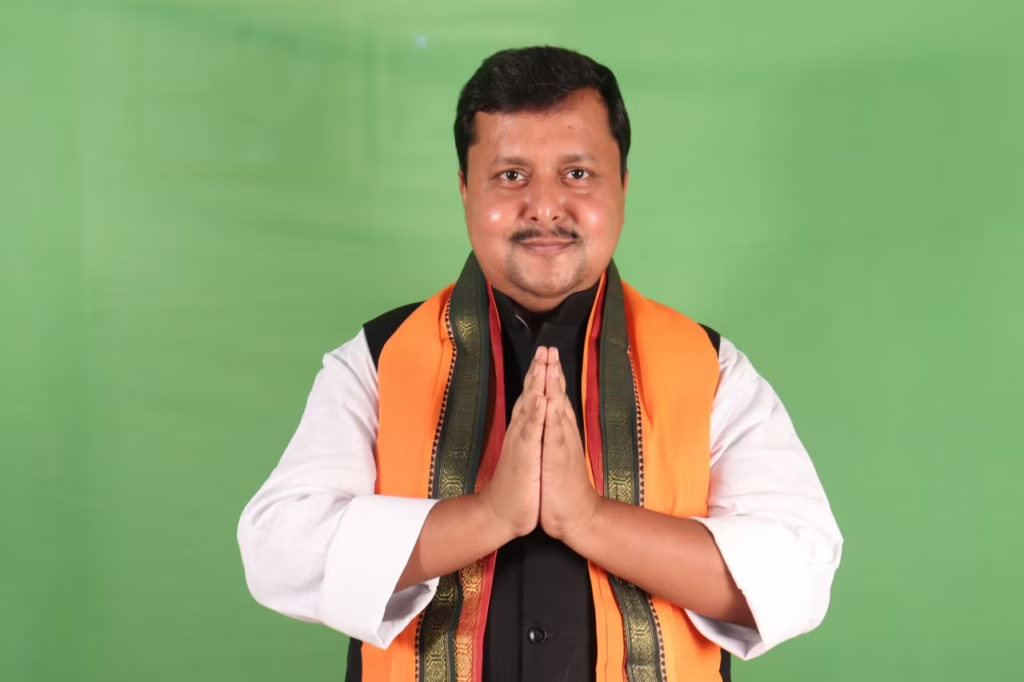
Kishor secured the Bankipur seat with a margin of more than 19,000 votes, defeating rivals in a constituency long regarded as a Bharatiya Janata Party (BJP) bastion. The seat had been represented for years by BJP leader Nitin Nabin, who recently became the party’s national president. Historically, the BJP had enjoyed overwhelming support in the constituency, making Kishor’s victory particularly noteworthy.
Turning Defeat into a Learning Opportunity
Rather than withdrawing from Bihar politics after the 2025 election defeat, Kishor publicly vowed to continue his political mission.
He soon embarked on a period of reflection, observing a day of silence at Bhitiharwa Ashram in West Champaran in November 2025. Shortly afterwards, he announced the Bihar Navnirman Yatra, a statewide outreach campaign that began in February 2026 with the aim of reaching every village, ward and household across the state.
Kishor also made a series of symbolic and organisational decisions to reinforce his commitment. He pledged to donate 90 percent of his income over the next five years to the Jan Suraaj Party and announced that most of his personal assets would be transferred to the organisation. In addition, he left his residence in Patna and shifted to the Bihar Navnirman Ashram, where he now lives alongside hundreds of party volunteers.
Strategic Changes After the 2025 Setback
The by-election campaign reflected a significant shift in Kishor’s political strategy.
Instead of depending heavily on consultants and professionals, Jan Suraaj focused on building a dedicated grassroots network. Following the Assembly election defeat, the party reduced its professional workforce and strengthened volunteer-based operations. Booth-level teams, women volunteers and caste-focused outreach groups were established to improve local engagement.
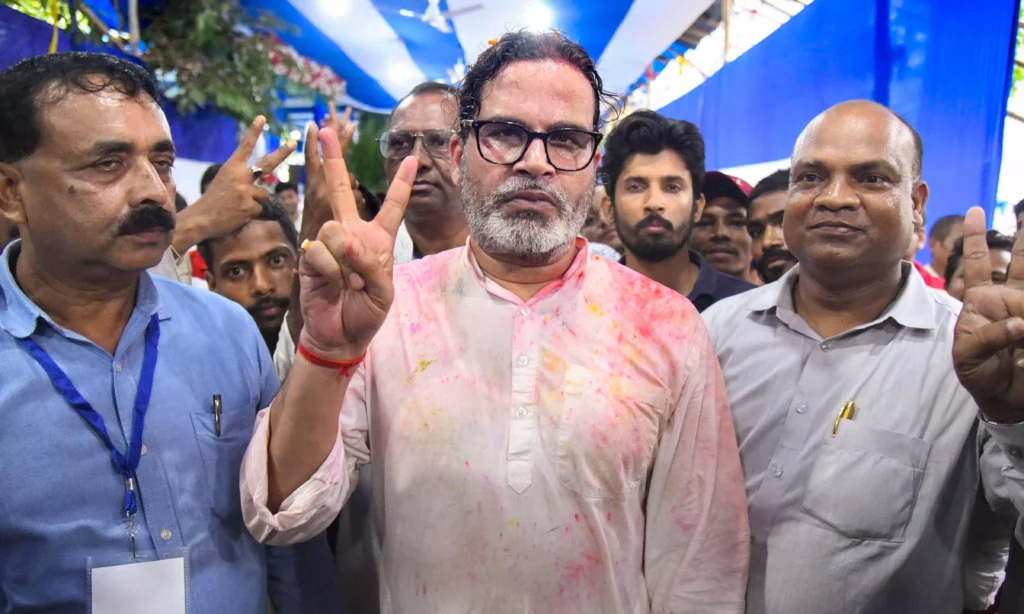
The party also moved away from district-centric organisation and concentrated on intensive booth management. Volunteers worked continuously from neighbourhood campaign centres, maintaining direct contact with voters throughout the campaign.
Unlike the previous Assembly election, Kishor also contested the election himself instead of remaining only a campaign strategist. During public meetings, he repeatedly promoted the slogan, “Right People, Right Thinking,” presenting himself as a leader directly accountable to voters.
Why Bankipur?
Political analysts believe Kishor deliberately selected Bankipur for both symbolic and strategic reasons.
A victory in a constituency traditionally dominated by the BJP would immediately attract public attention and revive the morale of Jan Suraaj workers after the disappointing Assembly election results.
Analysts also argue that challenging the BJP in one of its safest seats helped Kishor project political independence, countering accusations from opposition parties that he was indirectly aligned with the BJP.
Factors Behind the Surprise Win
Several factors contributed to Kishor’s unexpected success.
He positioned Jan Suraaj as a genuine third alternative to both the BJP-led National Democratic Alliance (NDA) and the Rashtriya Janata Dal (RJD)-led opposition alliance. His campaign targeted voters dissatisfied with both political blocs.
The election also took place amid growing public debate over issues such as paper leak controversies, youth protests, unemployment and governance. Political observers believe these concerns influenced many younger voters, who were willing to support a new political face.
At the local level, Kishor focused on civic issues affecting Bankipur, including waterlogging, traffic congestion, infrastructure, higher education, employment opportunities and migration. His campaign combined meetings with upper-caste residential communities, traders and professionals while simultaneously conducting extensive door-to-door outreach in slum areas.
Does This Provide a Formula for Winning Bihar?
Despite the impressive victory, political experts caution against viewing the Bankipur result as a blueprint for winning Bihar.
They point out that Bankipur is an urban constituency with relatively high literacy levels, whereas most of Bihar’s population lives in rural areas where voting patterns differ significantly.
Caste dynamics also remain a defining factor in Bihar’s politics. While Bankipur has a sizeable upper-caste electorate, much of the state’s population belongs to Other Backward Classes (OBCs), Dalits and Mahadalits, whose political loyalties have traditionally favoured established regional parties.
Furthermore, Jan Suraaj still lacks the extensive grassroots organisational network enjoyed by larger parties such as the BJP, Janata Dal (United) and the RJD.
Nevertheless, political analysts agree that the Bankipur victory has re-established Prashant Kishor as a serious political contender. If he succeeds in expanding his grassroots network and convincing voters that Jan Suraaj represents a credible third alternative, Bihar’s political landscape could witness a major realignment in the years ahead.