
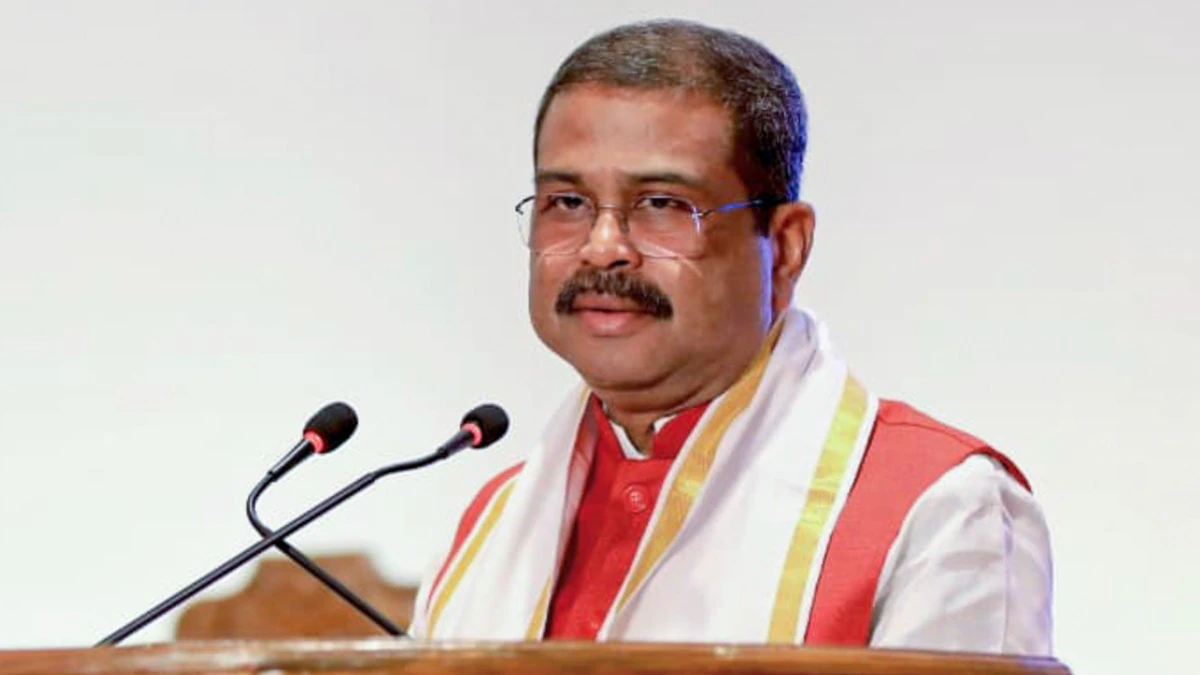


Weeks of nationwide demonstrations, political pressure and growing public outrage culminated in the Education Minister’s resignation. But with key demands still unmet, protesters say the battle is far from over.
Table of Contents
New Delhi: Union Education Minister Dharmendra Pradhan resigned from the Cabinet after weeks of escalating protests over the alleged NEET paper leak controversy, bringing an end to one of the biggest political crises faced by the government in recent years.
The resignation follows more than a month of demonstrations at Delhi’s Jantar Mantar, fierce attacks from the Opposition, growing public anger over police action against protesters, and solidarity protests by Indian students across several countries.
The move marks only the second major instance in the past decade in which sustained public protests have compelled the government to make a significant political concession. The first came in 2021, when the Centre repealed the three controversial farm laws after prolonged farmers’ protests.
From Hunger Strike to Nationwide Movement: How the Protest Gathered Steam
The agitation began on 20 June, when the Cockroach Janata Party (CJP) launched a protest at Jantar Mantar demanding accountability over the alleged examination irregularities.
The movement gained fresh momentum eight days later after activist Sonam Wangchuk joined the protest with a hunger strike, drawing widespread public attention.
The defining moment came on 18 July, when Delhi Police shifted Wangchuk to Safdarjung Hospital. Images of the incident spread rapidly across social media, triggering sympathy for the protesters and swelling the crowds at Jantar Mantar.
Tensions escalated further on 20 July, when police used force to disperse demonstrators marching towards Parliament. Videos of the clashes quickly went viral, fuelling public outrage and intensifying criticism of the government’s handling of the situation.
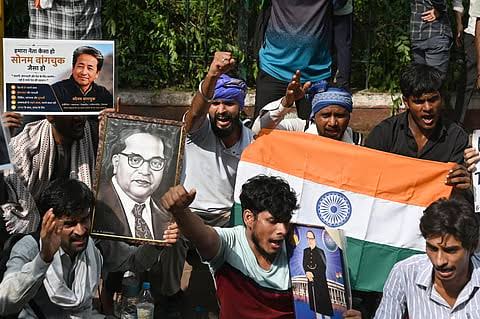
The movement soon crossed national borders, with Indian students organising demonstrations in the United Kingdom, Germany, the Netherlands, Ireland, Canada and the United States, demanding Pradhan’s resignation.
Five Key Reasons the Government Came Under Intense Pressure
1. Jantar Mantar Became the Epicentre of Student Anger
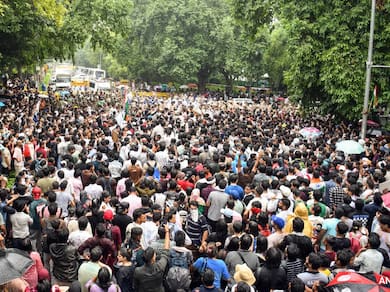
For more than 35 days, thousands of students remained camped at Jantar Mantar, turning the protest into a symbol of youth discontent.
Instead of weakening after the police action during the Parliament march, the movement gathered even greater momentum, attracting fresh participants from across the country.
2. Opposition Turned the Protest into a National Political Battle
The political stakes rose sharply when Rahul Gandhi, along with Priyanka Gandhi, Akhilesh Yadav and several Opposition leaders, staged a sit-in near the Prime Minister’s residence.
The Opposition refused to engage in discussions until Pradhan resigned, while Parliament witnessed repeated disruptions as leaders pressed the government over the controversy.
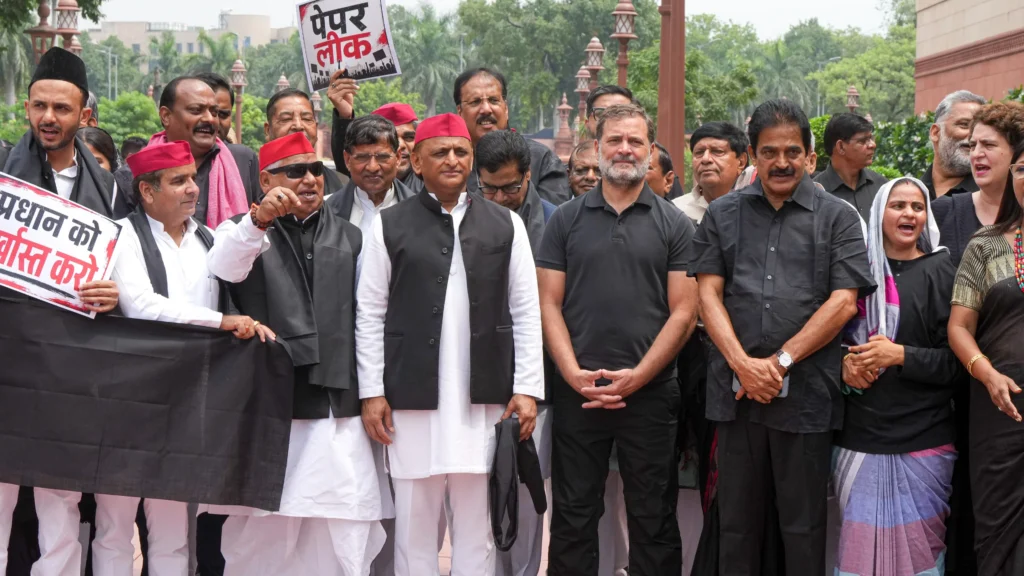
Their coordinated campaign ensured the issue remained at the centre of national political debate.
3. Criticism Emerged From Within the BJP and Public Figures
Pressure was no longer confined to the Opposition.
Former BJP president Murli Manohar Joshi publicly expressed concern over the treatment of protesting students, while RSS chief Mohan Bhagwat stressed the importance of engaging with young people through dialogue, though he stopped short of directly commenting on the protests.
Media reports also suggested that several BJP and NDA leaders privately believed the crisis had been mishandled, allowing a student movement to snowball into a national political issue.
4. Youth Discontent Raised Serious Political Concerns
The controversy struck a sensitive nerve among young voters.
With nearly half of India’s population below the age of 29, concerns over examination integrity, education and employment quickly transformed into a broader debate about the government’s accountability.
Surveys conducted during the protests indicated widespread public awareness of the movement, with many respondents believing the issue could politically damage the ruling alliance if left unresolved.
5. Fear of Electoral Fallout Became Hard to Ignore
Political observers believe the protests had the potential to shape upcoming Assembly elections in Uttar Pradesh, Punjab and Uttarakhand, as well as influence the political narrative ahead of the 2029 Lok Sabha elections.
Analysts argued that had the agitation continued, Opposition parties could have successfully projected the issue as a symbol of the government’s failure to protect students’ interests.
Some commentators even compared the movement’s growing momentum with the 1974 JP Movement and the 2011 Anna Hazare anti-corruption movement, both of which significantly altered India’s political landscape.
Resignation Comes Before Scheduled Talks
According to protest leaders, the government had sought 24 hours to hold discussions with representatives of the movement.
However, before the scheduled meeting could take place, Dharmendra Pradhan submitted his resignation, a move widely seen as an attempt to defuse the escalating political crisis.
Has the Resignation Ended the Protest? Not Yet
Despite securing one of their principal demands, protest organisers insist that the agitation will continue.
The CJP maintains that two key demands remain unresolved:
- Compensation for the families of students who allegedly died by suicide in connection with the NEET controversy.
- Assurance that no legal action will be taken against protesters.
Movement leaders have made it clear that demonstrations will continue until the government provides written assurances on these issues.
Political Analysts See Scope for De-escalation
Some political analysts believe the intensity of the movement could gradually diminish now that the government has taken its first major step by accepting the minister’s resignation.
According to them, once negotiations formally begin, prolonged street protests often lose momentum, increasing the likelihood of a negotiated settlement.
The Road Ahead
Dharmendra Pradhan’s resignation marks a significant political setback for the government and a major victory for the student-led movement. Yet, the future of the protests remains uncertain.
Whether the demonstrations conclude peacefully or evolve into a broader campaign on education reforms and youth issues will largely depend on how the government responds to the protesters’ remaining demands in the coming days.