






New Delhi/Mumbai/Bhopal: Escalating geopolitical tensions in West Asia are beginning to impact everyday life in India, with companies warning of price hikes across a wide range of essential goods—from groceries and dairy to household appliances and medical supplies.
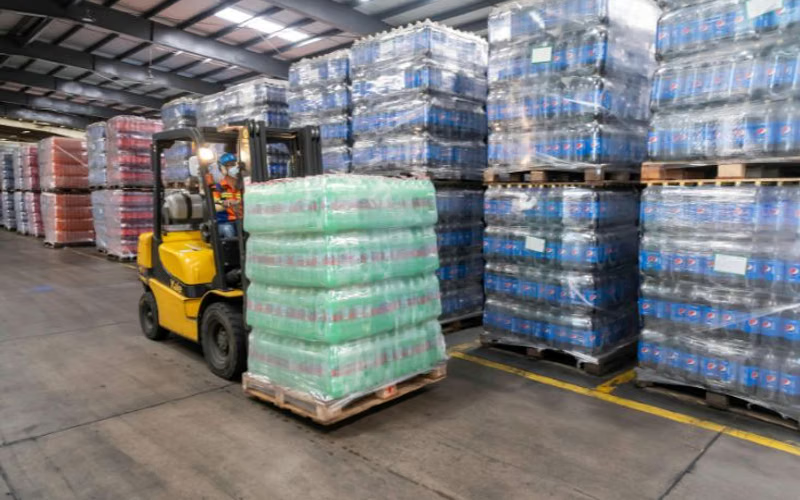
Industry leaders say the surge in crude oil and raw material prices has significantly increased production costs, forcing businesses to consider passing the burden on to consumers. Items such as bottled water, edible oils, salt, air conditioners, refrigerators, and even non-surgical medical products may soon become more expensive.
At the heart of the crisis lies the plastic industry, which is facing severe disruptions. Over the past month, prices of key raw materials have jumped sharply—by as much as 50–70%. Low-density polyethylene (LDPE), a widely used plastic component, has risen from ₹110 per kg to nearly ₹180 per kg. Other polymers and inputs have also recorded steep increases, ranging between ₹30,000 and ₹70,000 per tonne.

Experts warn that plastic product prices could climb by 50–60% in April, while items like water tanks and containers may see a 30–40% increase.
The situation is further aggravated by a shortage of commercial LPG, a critical fuel for manufacturing units. Nearly 20,000 small-scale industries, particularly in the plastic sector, are estimated to have shut down or reduced operations due to the gas crunch. Across the country, the impact is visible in industrial hubs such as Rajkot, Hyderabad, Raipur, and parts of Madhya Pradesh, where several plants have either halted production or scaled back significantly.
Manufacturers say the shortage has made operations nearly impossible. Some units report being unable to procure LPG even at significantly higher prices, leading to cancelled orders and mounting financial stress.
The ripple effects are also being felt in urban households. With cooking gas shortages and a decline in the availability of domestic help, many families are turning to convenience foods. Demand for ready-to-eat meals and quick-cooking solutions has surged across e-commerce and quick-commerce platforms. Sales of products like instant noodles, juices, nuts, and protein-based snacks have seen notable growth, while appliances like induction cooktops are witnessing an unprecedented spike in demand.
Meanwhile, the cement industry is also grappling with rising input costs, driven by higher prices of petcoke, coal, and packaging materials. Analysts estimate that production costs could increase by ₹150–₹200 per tonne, putting pressure on profit margins. Although companies attempted to raise cement prices earlier this quarter, weak market demand forced them to roll back most of the hikes.
Industry bodies have urged the government to intervene, including calls for a reduction in GST on plastic products and increased working capital limits for businesses to ease cash flow challenges.
As global uncertainties persist, the cascading effects on supply chains and production costs suggest that Indian consumers may soon have to brace for a more expensive daily life.


