
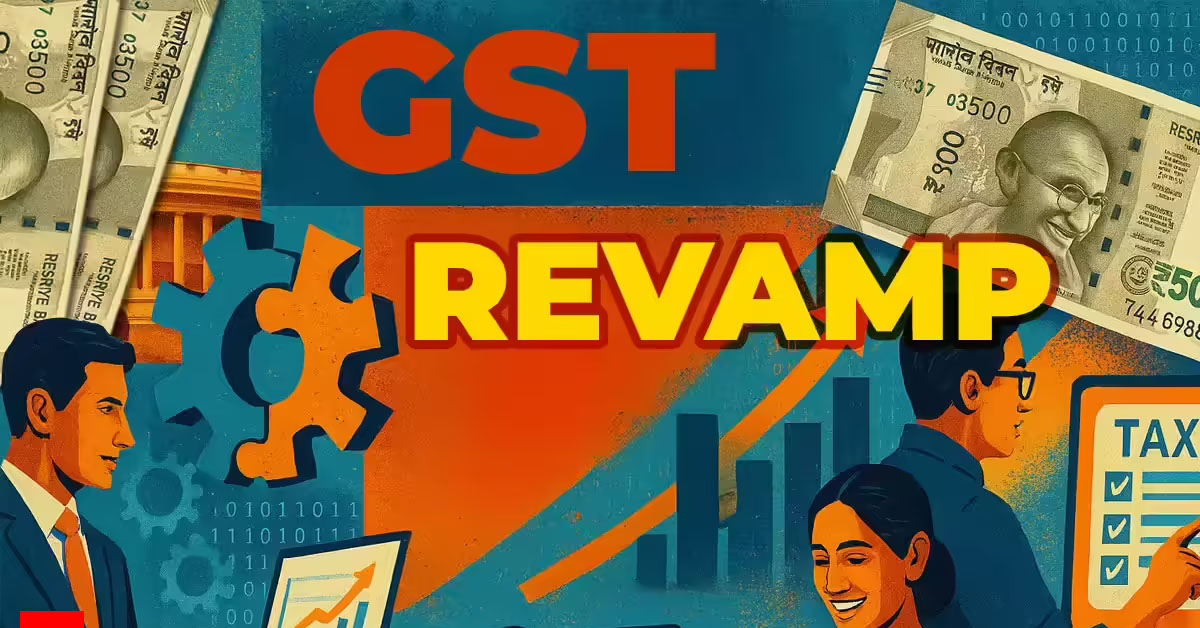


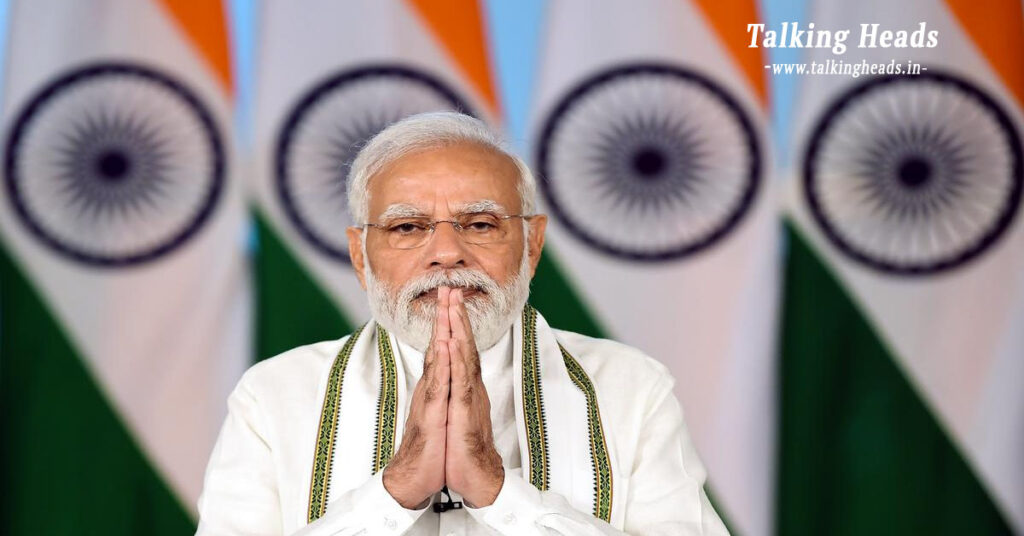
India is set to witness a historic change in its tax regime with the launch of “GST 2.0” or Next-Gen GST. Announced by Prime Minister Narendra Modi during his Independence Day speech from the Red Fort, the reform aims to reduce the Goods and Services Tax (GST) from four slabs to just two—5% and 18%. The move is expected to bring down prices of essential goods, from refrigerators and televisions to cement and packaged food, by up to 10%.
Table of Contents
Major GST Reform: Four Slabs Reduced to Two
Currently, India’s GST structure includes four tax slabs—5%, 12%, 18%, and 28%. Under the proposed reform, only two slabs will remain: 5% for essential goods and 18% for standard and luxury products.
This means:
Goods taxed at 12%—such as butter, fruit juice, dry fruits, and processed food—will now fall into the 5% slab, making them 7% cheaper.
- Goods in the 28% slab—like cement, refrigerators, washing machines, air conditioners, and televisions—will be shifted to the 18% slab, making them about 10% cheaper.
The government believes this simplification will stabilize tax rates, reduce the complexity of input tax credit (ITC), and boost consumer demand.
Everyday Goods to Get Cheaper Under GST 2.0
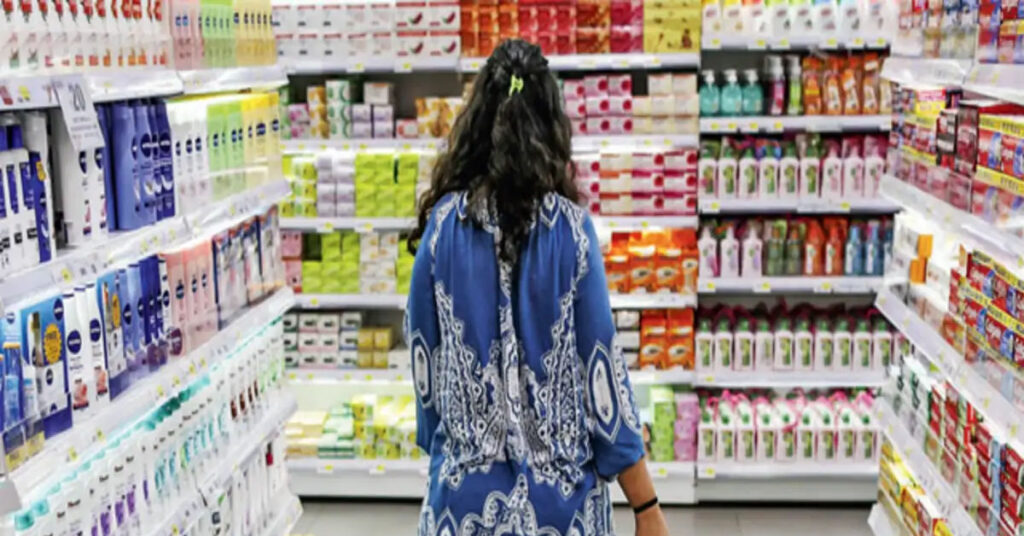
With over 10 lakh products covered under GST, the changes will directly impact household budgets. Here are some examples:
- A bag of cement priced at ₹350 could drop by ₹28.
- An ₹80,000 television will be cheaper by nearly ₹8,000.
- A ₹40,000 refrigerator will see a price cut of ₹4,000.
- Even premium sweets priced at ₹1,000 per kg could become ₹70 cheaper.
By simplifying the slabs, the government aims to make everyday essentials more affordable while giving industries like textiles and consumer electronics a significant push.
List of Goods to See Price Reductions
Products Moving from 12% to 5% GST
These include dry fruits, branded snacks, toothpaste, soap, hair oil, antibiotics, painkillers, frozen vegetables, processed foods, ready-made garments above ₹1,000, footwear in the ₹500–₹1,000 range, bicycles, utensils, solar water heaters, sewing machines, and most vaccines. Consumers can expect around 7% price reduction on these items.
Products Moving from 28% to 18% GST
High-value goods such as cement, chocolates, televisions, refrigerators, washing machines, air conditioners, beauty products, printers, razors, dental floss, and dishwashers will now fall into the lower slab. These goods will see up to 10% price cuts.
Insurance Premiums and Healthcare to Become More Affordable
Another key relief is expected in the insurance sector. Life and health insurance premiums, which currently attract 18% GST, may be reduced to 5% or even exempted entirely. If implemented, this would encourage more people to opt for insurance, improving financial protection for households.
Similarly, diagnostic kits for HIV and TB, vaccines, and essential medicines will become cheaper, directly benefiting public healthcare.
GST Refunds and Filing Process to Be Simplified
The government has also promised to revolutionize the GST filing and refund system. Refunds will be automated, eliminating the need for manual applications. Registration will be fully online and time-bound, while pre-filled returns—similar to income tax filing—will reduce errors and paperwork.
These measures are designed to make compliance easier for small businesses and exporters, ensuring a smoother tax ecosystem.
Textile and Fertilizer Industries to Gain Big
The textile sector, one of India’s largest employers, has long struggled with an inverted duty structure, where raw materials are taxed higher than finished goods. Currently, fabrics attract 12% GST while finished garments are taxed at 5%. Under GST 2.0, both will fall into the 5% slab, lowering costs for manufacturers and making Indian textiles more competitive globally.
The fertilizer sector will also benefit, with input taxes expected to drop from 18% to 5%. This would make fertilizers cheaper for farmers, reducing agricultural costs and boosting rural demand.
Compensation Cess to Be Replaced
At present, ultra-luxury items attract a compensation cess as high as 204%. Under the new framework, this will be abolished and replaced with a 40% special rate on items like luxury cars, tobacco, online gaming, and other harmful or non-essential products.
Government’s Long-Term Vision: One Nation, One Tax Rate by 2047
According to the Finance Ministry, the two-tier GST is the first step toward a single, uniform tax rate by 2047. The reform is based on three pillars:
- Structural reform – correcting inverted duty structures and reducing ITC accumulation.
- Rationalization of tax rates – lowering GST on essential goods and simplifying slabs.
- Ease of doing business – faster registration, pre-filled returns, and automatic refunds.
The proposal has been sent to a Group of Ministers (GoM) for review and will be discussed in the next GST Council meeting in September. If approved, consumers could start seeing price reductions before the festive season, effectively making it a “Diwali gift” from the government.
Final Outlook
The upcoming GST 2.0 reform is expected to reduce prices across essential and luxury goods, simplify compliance for businesses, and stimulate consumption at a time when India is dealing with global trade pressures. By cutting taxes on insurance, healthcare, textiles, and fertilizers, the government also aims to support households, farmers, and industries alike.
If implemented smoothly, the reform could mark the beginning of a new era in India’s taxation system—one that is simpler, fairer, and more consumer-friendly.